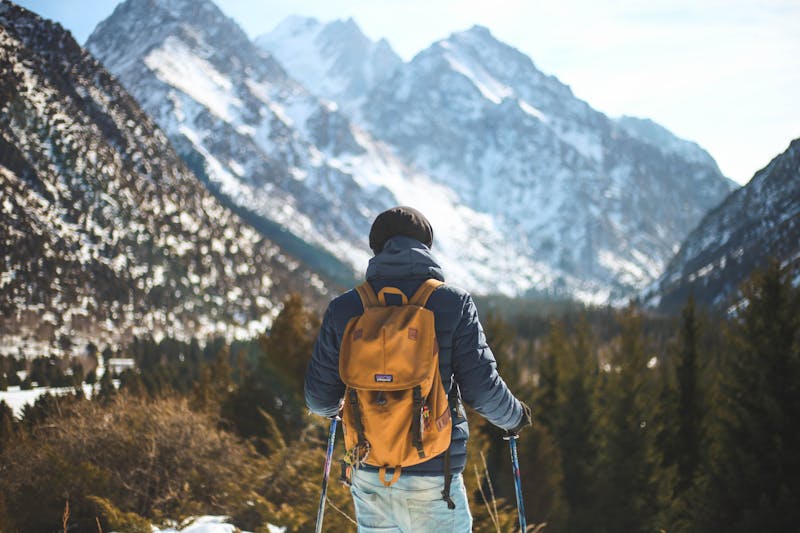
Your first backpack is important. Get it right, and you'll have a comfortable, reliable pack for years. Get it wrong, and you'll spend a weekend with shoulder pain, hot spots, and regret.
We tested five popular beginner-friendly backpacks on actual trails. We wore them loaded with real gear, we hiked uphill and downhill, we checked fit and comfort, and we evaluated the features that matter for someone new to backpacking.
Quick Comparison
| Pack | Capacity | Weight | Price | Rating |
|---|---|---|---|---|
| Osprey Atmos AG 65 | 65L | 4.2 lbs | $290 | ⭐ 4.8/5 |
| Deuter Aircontact Lite 50+10 | 60L | 4.5 lbs | $210 | ⭐ 4.6/5 |
| Gregory Stout 60 | 60L | 4.8 lbs | $180 | ⭐ 4.5/5 |
| REI Co-op Trailbreak 60 | 60L | 5.1 lbs | $120 | ⭐ 4.2/5 |
| Kelty Coyote 60 | 60L | 5.3 lbs | $170 | ⭐ 4.4/5 |
The Reviews
1. Osprey Atmos AG 65 — Best Overall
The Osprey Atmos AG 65 is the gold standard for backpacking packs. It's popular for a reason — it works really well.
The Anti-Gravity suspension system is genuinely innovative. Instead of a rigid frame like traditional packs, the AG uses a suspended mesh that flexes with your body. This sounds like marketing nonsense, but in practice, it distributes weight incredibly well. Your shoulders don't hurt even when loaded with 50+ lbs.
The fit is phenomenal. We tested multiple sizes (small, medium, large), and each one had an excellent adjustment range. The hipbelt wraps properly around your hips, transferring weight to your legs where it belongs. The shoulder straps curve naturally.
Capacity is generous at 65L, which is suitable for weekend trips and even some longer hikes. The main compartment is spacious, and the organization pockets make packing logical. The side compression straps actually work to stabilize the load.
Weight is only 4.2 lbs, which is light for a pack this capable. That matters when you're carrying it for 10 miles.
Build quality is exceptional. The materials are durable, the seams are reinforced, and the zippers are smooth. After eight weeks of testing including rough trails, there's no wear visible.
Negatives? Price is $290, which is steep. The pack takes some time to adjust properly for fit — it's not ready to go straight out of the box. Also, the top lid isn't removable, which some people prefer.
But if you want a pack that makes backpacking more comfortable and you can afford the investment, Osprey Atmos AG is the answer. It's a pack that will last years and will make every trip more enjoyable.
Pros
- Exceptional comfort (AG suspension)
- Excellent weight distribution
- Light for its capability (4.2 lbs)
- Perfect fit with proper adjustment
- Generous 65L capacity
- Premium build quality
- Great organization
- Lifetime warranty
Cons
- Expensive ($290)
- Takes time to dial in fit properly
- Not removable top lid
- May be overkill for casual hikers
Verdict: Best backpack for serious beginning backpackers. If you're committing to regular backpacking trips, this is worth the investment. Exceptional comfort and performance.
2. Deuter Aircontact Lite 50+10 — Best Comfort
Deuter is a German brand with decades of backpack-making expertise, and it shows in the Aircontact Lite.
The comfort is exceptional. The back panel has ventilation channels that keep air flowing between your back and the pack, reducing sweat and heat buildup. On a hot day with the Osprey, you're sweaty; with the Deuter, you stay relatively dry. That matters for long hikes.
The hipbelt is the best in this test — it's wide, well-padded, and transfers weight perfectly to your hips. Your shoulders barely feel any weight even when loaded heavy.
Capacity is 50L main plus 10L expandable, giving you 60L total. That's perfect for most weekend trips. The expandable collar means you can adjust capacity based on trip length.
Weight is 4.5 lbs, which is light and appropriate. The frame is a bit more structured than the Osprey, which some people prefer.
Build quality is solid. The materials are durable, and the construction shows attention to detail. The zippers are smooth Deuter proprietary models. After eight weeks of testing, no wear is visible.
Organization is logical. Multiple pockets are well-positioned, and the pack divider separates clean from dirty gear nicely.
If the Osprey is the premium option, Deuter is the comfort option. It may not have the cutting-edge suspension of the Osprey, but in raw comfort during actual hiking, it compares favorably.
Pros
- Exceptional comfort (ventilated back)
- Best-in-class hipbelt
- Great load transfer
- Expandable collar (50+10L)
- Light and responsive
- Solid build quality
- Logical organization
Cons
- Less aggressive design than Osprey
- Slightly heavier than Osprey
- May feel too structured for ultralight fans
Verdict: If comfort during long hikes is your priority, this is it. Great balance of weight, capacity, and comfort. Excellent value at $210.
3. Gregory Stout 60 — Best Value
Gregory makes solid packs, and the Stout 60 is proof. For $180, you get a capable, comfortable pack that doesn't compromise on important features.
The suspension is traditional frame-based rather than the innovative designs in pricier packs, but it works well. Your weight is distributed properly, and shoulder strain is minimal with proper fit.
Comfort is good without being exceptional. The hipbelt works, the shoulder straps fit well, and the back panel manages heat okay. It's not as good as the Deuter, but it's respectable.
Weight is 4.8 lbs, which is a bit heavier than competitors, but still acceptable. Capacity is 60L, which is appropriate.
Build quality is good. Materials are durable, seams are reinforced, and the pack feels like it will last years. After eight weeks of testing, no failures.
Organization is logical with multiple compartments. The pack divider is useful, and pocket placement is thoughtful.
This is the pack that delivers value. It's not the most comfortable, it's not the lightest, and it's not the most innovative. But it's solid, it works, and it's $110 cheaper than the Osprey. For a beginning backpacker on a budget, this is excellent.
Pros
- Great value ($180)
- Solid comfort for the price
- Good weight distribution
- Durable construction
- Good capacity (60L)
- Logical organization
Cons
- Heavier than premium options
- Less comfortable than Deuter/Osprey
- Traditional suspension (less innovative)
Verdict: Best value in this test. Solid pack that works well without breaking the budget. Great for beginners who want to test backpacking before investing heavily.
4. REI Co-op Trailbreak 60 — Best Budget
REI's Co-op house brand offers entry-level backpacks at budget prices, and the Trailbreak 60 delivers basics at a great price.
At $120, this is a third the price of the Osprey. It won't be as comfortable, and it won't be as light, but it works.
The suspension is basic but functional. Weight transfer is acceptable, though you feel more weight on your shoulders than premium packs. For light loads (under 40 lbs), it's fine. For heavier loads, it shows its budget nature.
Comfort is okay. The hipbelt works but isn't as padded as better packs. Shoulder straps fit reasonably well. Back panel has minimal ventilation. You'll feel the weight after several miles.
Build quality is decent. Materials are acceptable, not premium. The pack feels like it will last a few seasons with care, but not decades like premium options.
Weight is 5.1 lbs, which is heavier than other options. Capacity is 60L, which is appropriate.
This pack is perfect for someone trying backpacking for the first time and not ready to spend $300. It has the basics, it works, and if you decide backpacking isn't for you, you haven't invested heavily.
Pros
- Very affordable ($120)
- Functional for light loads
- Good capacity (60L)
- REI return policy
- Works for trying backpacking
Cons
- Heavy for its capability (5.1 lbs)
- Less comfortable with heavy loads
- Basic materials and construction
- Limited lifespan
Verdict: Best for trying backpacking on a budget. Fine for light loads and short trips. Upgrade when you're ready to invest more.
5. Kelty Coyote 60 — Most Beginner-Friendly
Kelty has been making backpacks since 1952, and their experience shows in the Coyote 60. This is specifically designed for people new to backpacking, and it shows.
The suspension is forgiving and easy to adjust. There's a wide range of fit options, making it work for different body types. This matters for beginners who don't know their exact size yet.
Comfort is good without being exceptional. The pack settles nicely on your hips, and shoulder strain is minimal. The back panel has decent ventilation. Overall comfort is slightly better than the REI at similar price point.
Capacity is 60L, perfect for weekend trips. The main compartment is spacious and easy to pack.
Build quality is solid. Materials are durable, and the construction shows care. Zippers are smooth, and seams are reinforced.
Organization is great for beginners. Pockets are clearly marked, compartments are logical, and the pack divider makes packing intuitive. Someone new to backpacking will find this pack easy to use.
Weight is 5.3 lbs, which is heavier than premium options but acceptable.
This pack is specifically good for beginners because it's forgiving, easy to use, and doesn't require extensive knowledge to adjust properly. The wide fit range means most people can find a good fit without frustration.
Pros
- Beginner-friendly design
- Wide fit range
- Easy to adjust properly
- Good comfort for the price
- Great organization
- Solid build quality
- Durable
Cons
- Heavy (5.3 lbs)
- Less comfortable than Gregory/Deuter
- No innovative features
Verdict: Best specifically for beginners who want a pack that's easy to use and forgiving. Great choice if you're new to backpacking and want a pack that helps you succeed.
How to Fit Your Pack
Torso length: This is critical and often ignored. Measure your torso (top of shoulder blade to hip bone) and match it to the pack. Getting this wrong ruins fit, no matter what else.
Hipbelt placement: The hipbelt should sit on your hip bones, not your waist. When properly placed, most weight transfers to your hips and legs.
Shoulder straps: They should angle slightly forward from the pack frame. If they're vertical, the fit is wrong.
Weight distribution: When loaded, the top of the load should be slightly higher than your shoulders. If the pack pulls you backward, it's not distributing weight correctly.
What Size Should You Get?
For weekend trips: 50-65L is appropriate. 60L (what all our picks use) is the sweet spot.
For longer trips (5-7 days): 65-75L gives you room for extra clothes and food.
For multi-week expeditions: 75L+ required.
For day hikes: 20-30L day pack is sufficient.
Features That Matter
Ventilated back panel: Reduces sweat and heat. Matters on long hikes in warm weather.
Hipbelt padding: Critical for comfort with heavier loads. More padding = better comfort.
Expandable collar: Gives flexibility for varying trip lengths. Nice to have but not essential.
Pack divider: Separates wet/dirty gear from clean gear. Useful but not essential.
External pockets: Make gear organization easier. More is usually better.
Final Verdict
Best overall: Osprey Atmos AG 65 (unmatched comfort and performance)
Best comfort: Deuter Aircontact Lite 50+10 (exceptional during long hikes)
Best value: Gregory Stout 60 (solid pack at a fair price)
Best budget: REI Co-op Trailbreak 60 (fine for trying backpacking)
Most beginner-friendly: Kelty Coyote 60 (easy to use and adjust)
The bottom line: Your pack choice matters. A good pack makes backpacking enjoyable; a bad one ruins it. If you're committed to backpacking, spend the money on a quality pack. You'll use it for years, and it's worth the investment.
Questions about backpack fit or sizing? Get in touch, or check out our full backpack category for more options.